+86 13638632902
 Jason@cleanroomequips.com
 MENU
MENUX











Cleanroom doors are door systems specifically designed for cleanrooms. Unlike ordinary doors, cleanroom doors need to provide reliable contamination control, airtight seals, and convenient disinfection. Designed by Deiiang experts, these doors meet international cleanroom standards, support GMP compliance, and enhance the safety, durability, and energy efficiency of pharmaceutical, biotechnology, electronics, and medical environments.
Our professional team will provide you with customized cleanroom door system solutions to meet your specific needs.
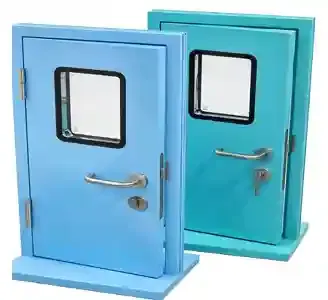
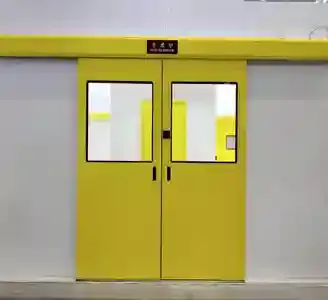
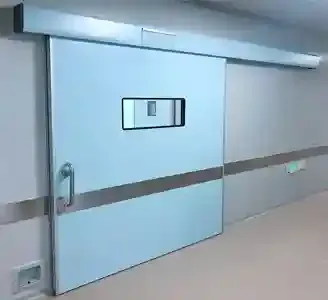
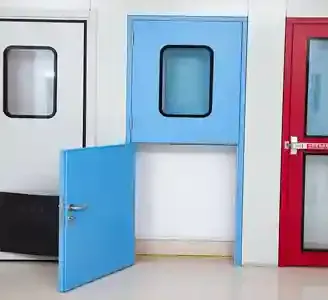
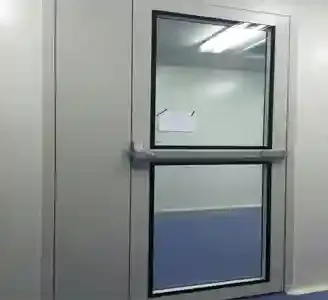
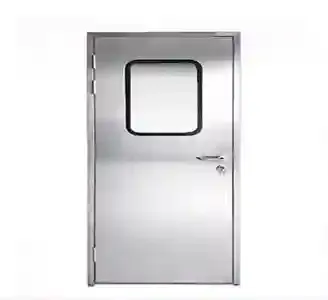
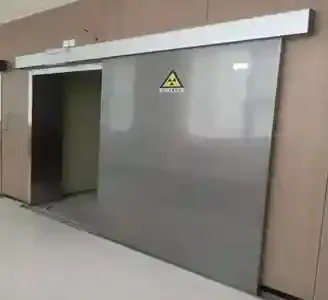
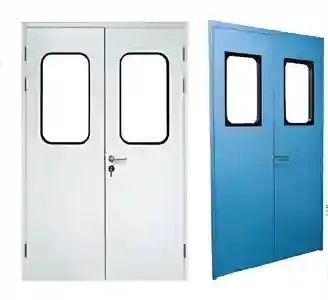
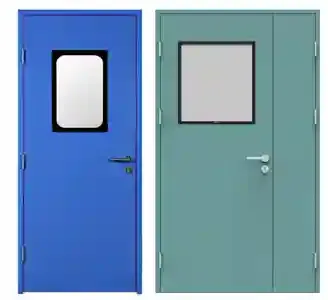
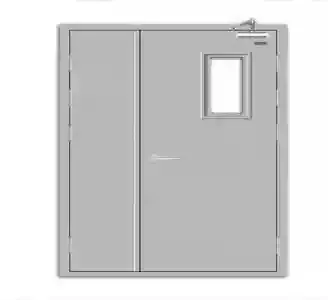
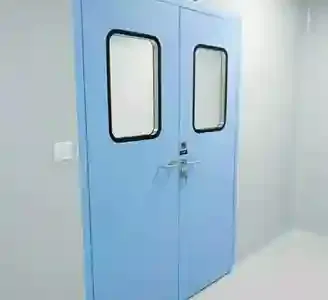
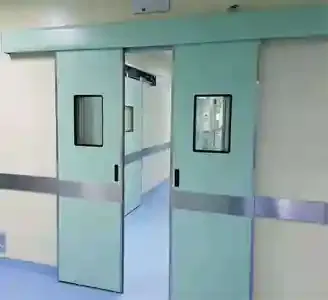
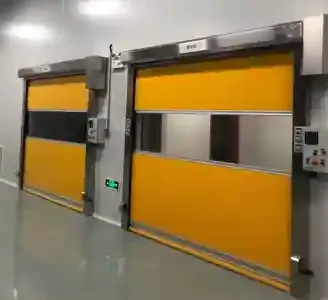
Hermetic Cleanroom Door
Typical: ≤ 1–3 m³/h·m² @ 50 Pa (according to common EN/GB testing requirements);
Suitable for pressure differentials of 15–30 Pa or even higher; special seals for door seams, minimizing pressure fluctuations;
Applications include operating rooms, ICUs, negative pressure wards, pharmaceutical filling rooms, mixing rooms, Class B/C core areas, and partitions between clean corridors and general areas;
Door cost is approximately 1.5–3 times that of a standard cleanroom door (depending on materials, automatic/manual operation, and hardware configuration); Regular inspection of sealing strips, sinking mechanisms, and door closers is required;
Standard Cleanroom Door
Typical: 3–10 m³/h·m² @ 50 Pa, or even higher
Generally suitable for pressures ≤15 Pa; pressure differential fluctuations are significant with frequent opening and closing.
Suitable for general cleanroom corridors, auxiliary rooms, changing rooms, storage areas, technical mezzanines, and non-critical rooms in cleanrooms.
Low cost, suitable for large-scale deployment in non-critical areas.
Simple maintenance, mostly conventional hinged doors; low cost for replacing sealing strips and hardware.
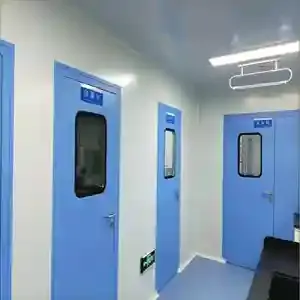
From compounding rooms to filling lines, doors must hold pressure, clean easily, and open quietly; hermetic or airtight cleanroom doors are common at critical GMP boundaries and airlocks.
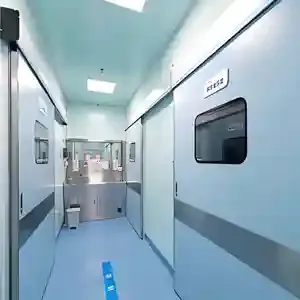
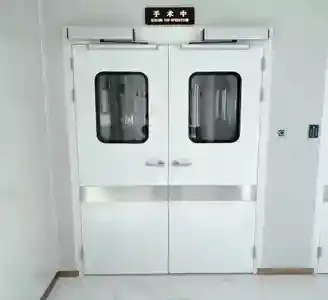
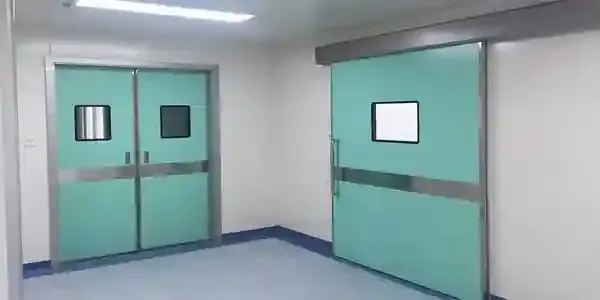
ICUs and operating rooms need doors that reduce air mixing and support infection control; automatic hermetic doors are often used so staff can pass stretchers hands‑free.
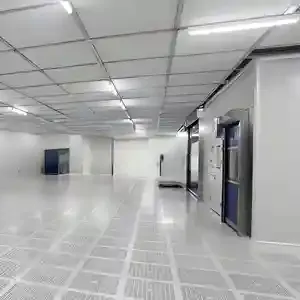
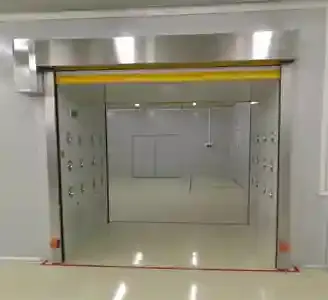
Electronics and Semiconductors To facilitate the movement of large cargo and equipment, wafer fabrication plants often install high-speed roll-up doors. Most applications require standard cleanroom-grade doors; these are typically equipped with vision panels, allowing personnel to see if anyone is on the other side before the door opens, thereby preventing collisions.
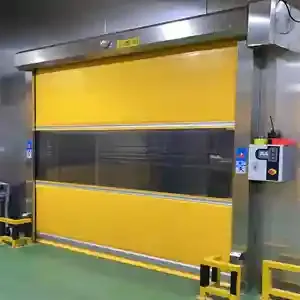
Stainless steel cleanroom doors are robust and corrosion-resistant, meeting the requirements of food processing environments. For cargo access points and packaging material entry/exit areas, high-speed roll-up doors can be used to create airlocks, or high-speed cargo air showers can be installed.
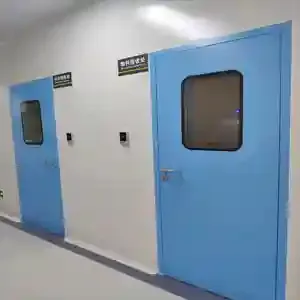
General labs can work with simple swing cleanroom doors, while high‑risk or pressure‑controlled rooms typically upgrade to hermetic cleanroom doors at the entry airlock.

Assembly and packaging lines need stable, clean environments without slowing operators, so many plants combine airtight cleanroom doors at key rooms with automatic doors on main routes.
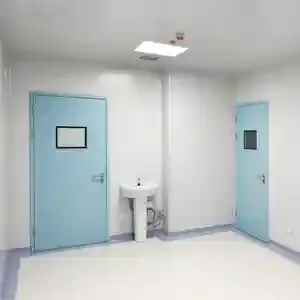
Standard steel cleanroom doors are usually used in mixing, filling, and packaging areas, but in special cases, sealed cleanroom doors with glass panels may be installed to limit the spread of powders and fragrances.
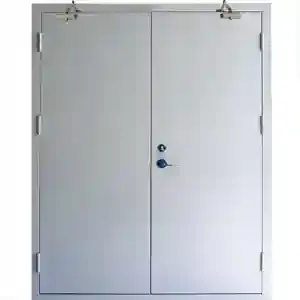
Where both fire safety and cleanliness are critical—such as sterile corridors or evacuation routes—fire rated cleanroom doors are specified to meet building codes and cleaning routines together.

To start, simply select a manufacturing process and upload a 3D CAD file.

Within a few hours we'll send you design for manufacturability (DFM) analysis and real-time pricing.

Once you review your quote and place your order, we'll start the manufacturing process. We also offer finishing options.

Our digital manufacturing process allows us to produce parts in as fast as 1 day.
Deiiang is a professional supplier and manufacturer of cleanroom building materials, providing you with one-stop integrated solutions for cleanroom building materials.
Send inquiry Now
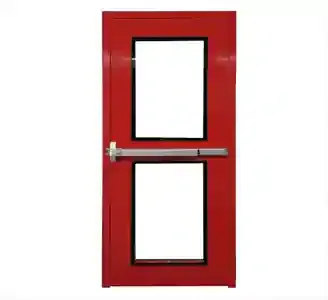
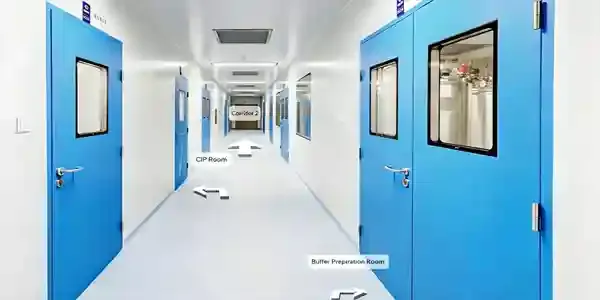
A cleanroom door is a door specifically designed for cleanrooms, not a regular household door. Its main characteristics include a smooth surface, minimal gaps, and reliable sealing. Cleanroom doors are generally made of steel and have observation windows for easy visibility when open. Cleanroom doors must meet the requirements of ISO 14644 or GMP for cleanroom building materials.
The difference between cleanroom doors and regular industrial doors is that cleanroom doors cannot handle dust. Some can be equipped with sealing gauges for pressure control, and interlocking devices can be installed to allow for interlocking between two or three doors.
Generally, selection is based on pressure requirements, corrosion resistance requirements, and automation requirements. If the room requires stable pressure (e.g., ISO 7-8 level corridor) but the pressure requirement is not high, a standard cleanroom door is usually sufficient. For operating rooms, negative pressure isolation rooms, high-level pharmaceutical areas, or critical process rooms, fully sealed cleanroom doors that have undergone airtightness testing are typically required.
Yes, our cleanroom doors are designed to fit perfectly with common modular wall systems and seamless cleanroom floors, featuring flush thresholds or stainless steel ramps to prevent dust accumulation. During the design phase, we typically inquire about wall details, floor structure, and door opening dimensions to ensure the door frame, threshold, and sealing lines match your existing building structure.
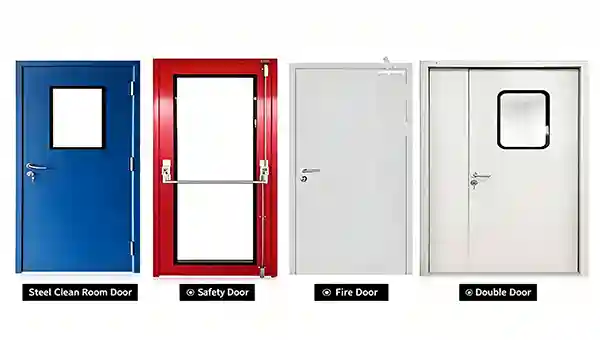
Yes, firstly, our standard products cover a wide range of cleanroom types and specifications to meet the practical needs of various applications, including sliding cleanroom doors, swing cleanroom doors, glass cleanroom doors, stainless steel cleanroom doors, HPL cleanroom doors, and airtight cleanroom doors. Secondly, we can customize production, including door height, width, door thickness, whether a viewing window is included, and whether a door closer is required.
Our designs adhere to widely recognized standards, such as ISO 14644 for cleanroom classes, EN and GB standards for door performance, and relevant fire safety regulations for fire-resistant cleanroom doors. For pharmaceutical and biotechnology projects, we also consider EU GMP and FDA requirements for cleanliness, particle control, and material compatibility with disinfectants.
This depends on traffic flow and hygiene conditions. If staff frequently push cots, trolleys, or heavy-duty carts, automatic cleanroom doors can reduce contact points and facilitate personnel movement.
For technical rooms with lower traffic flow, simple swing doors may be the most cost-effective option. Many projects combine both: automatic doors for main passageways and manual doors for auxiliary rooms.
From a cost perspective, automatic doors are more expensive than manual doors.
For environments with highly corrosive cleaning chemicals, high humidity, or high mechanical stress, stainless steel cleanroom doors are often the safest choice. For offices, laboratories, and many lower-load GMP areas, high-pressure laminate (HPL) cleanroom doors offer a very smooth, robust, and cost-effective surface. In some projects, we combine the two: stainless steel doors near production areas, and HPL doors near offices and quality control laboratories.